City guide
Living in Vancouver, BC
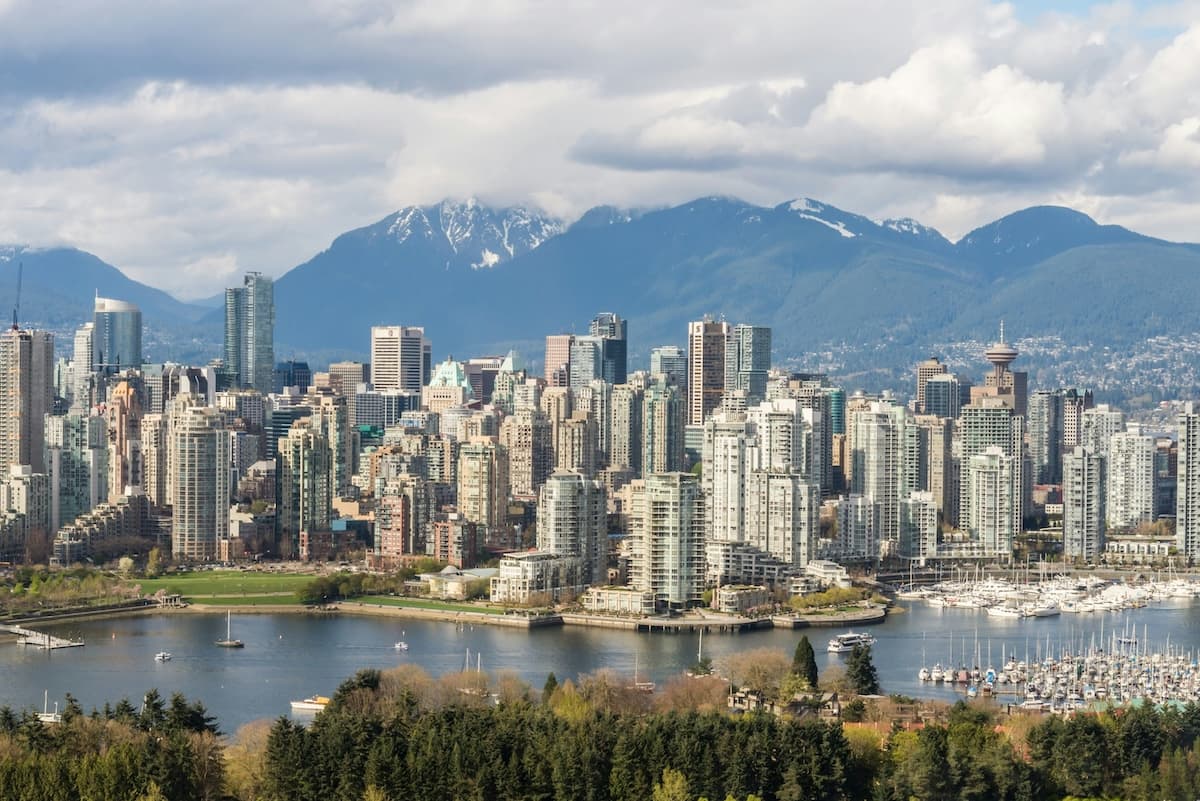
Ocean on one side, mountains on the other, and the most expensive rental market in Canada in between. Here is what renting in Vancouver is actually like, which neighbourhoods suit which budgets, and how BC tenancy rules protect you.
Mild winters Very walkable Outdoor access Expensive
1396 rentals available in Vancouver
What's it like to live in Vancouver?
Vancouver is small for a major city and hemmed in on every side, by water to the north and west, the US border to the south and the mountains behind. That geography is why the rent is what it is: there is nowhere left to sprawl, so the city has been growing upward and inward for thirty years. It also means you are never far from somewhere worth being outside in.The east side is generally cheaper than the west, and anything on the water carries a premium. Downtown and the West End give you walkability and towers; Kitsilano and Point Grey give you beach access and low rise character buildings; Mount Pleasant and Commercial Drive give you the restaurants and a younger crowd; Marpole, Renfrew and Collingwood give you the most space per dollar and a longer commute.Transit is genuinely good by North American standards. The SkyTrain runs on three lines without a driver and comes often enough that a schedule is beside the point, and the bus network fills in the gaps. Most renters here do not own a car, and the cost of parking is a real part of the housing decision rather than an afterthought.The trade-off is money. Vancouver is consistently among the most expensive places to rent in the country, and competition for good units is intense in spring and late summer. Expect to move quickly, have your documents ready, and know the tenancy rules before you sign.
Best suited for
- Outdoor and active lifestyles
- Renters without a car
- Students and new graduates
- Newcomers to Canada
- –Renters on a tight budget
- –Large households wanting space
Quick facts
- Population662,000
- Renter households55%
- Median age40
- Rental vacancy3.7%
Getting around
How walkable, cyclable and well served by transit the city is day to day.80/100
WalkabilityExcellent in the centre, thinner toward the south and east78/100
Transit accessThree SkyTrain lines, though whole neighbourhoods have no rail84/100
CyclingProtected lanes, the seawall and a mostly flat coreDowntown to Lonsdale Quay12 min by SeaBus
Downtown to Metrotown24 min by SkyTrain
Broadway to UBC35 min by bus
Downtown to Kitsilano15 min by bus
Downtown to YVR Airport26 min by Canada Line
Downtown to Surrey Central40 min by SkyTrain
Expo Line
Millennium Line
Canada Line
SeaBus
99 B-Line
R4 41st Ave
R5 Hastings St
Vancouver on the map
Vancouver's boundary, from Burrard Inlet to the Fraser.Schools and post-secondary
Vancouver is served by the Vancouver School Board plus several independent schools and post-secondary campuses.| School | Type | Area |
|---|---|---|
University of British Columbia | Post-secondary | West side |
Simon Fraser University (Vancouver) | Post-secondary | Downtown |
British Columbia Institute of Technology | Post-secondary | Burnaby |
Langara College | Post-secondary | South Vancouver |
Emily Carr University of Art and Design | Post-secondary | Great Northern Way |
Vancouver Community College | Post-secondary | Downtown and Broadway |
Vancouver School Board | Public · K–12 | Citywide |
Independent schools | Independent · K–12 | Citywide |
Neighbourhoods in Vancouver
Rent, transit and daily life change a great deal from one Vancouver neighbourhood to the next: towers downtown, house suites across the east side, character walk ups on the west side, and new apartments along the Canada Line. Choose a neighbourhood to see what living there is like.- Arbutus Ridge
- Chinatown
- Coal Harbour
- Downtown Vancouver
- Downtown Eastside
- Dunbar-Southlands
- Fairview
- False Creek
- Gastown
- Grandview-Woodland
- Hastings-Sunrise
- Kensington-Cedar Cottage
- Kerrisdale
- Killarney
- Kitsilano
- Marpole
- Mount Pleasant
- Oakridge
- Renfrew-Collingwood
- Riley Park
- Shaughnessy
- South Cambie
- Strathcona
- Sunset
- Victoria-Fraserview
- West End
- West Point Grey
- Yaletown
Rent with confidence in Vancouver
What BC tenancy rules protect, and how liv.rent keeps the process safe from first message to signed lease.Deposits are capped
A landlord in BC can ask for a security deposit of up to half a month of rent, plus up to half a month again if you have a pet. Anything more is not permitted.Rent increases are limited
Existing tenancies can only be increased once every 12 months, by no more than the provincial cap, and with three full months of written notice.Every listing is verified
Landlords complete ID verification before they can post, and you can sign the lease and pay rent through liv.rent, so there is no e-transfer to a stranger.Vancouver has one of the highest rates of rental scams in Canada. Never send a deposit before viewing a unit, and never pay outside a platform that keeps a record. The tenancy points above are general information about renting in British Columbia, not legal or financial advice. For guidance on your own tenancy, contact the Residential Tenancy Branch.How liv.rent verification works
Vancouver rental questions
Is Vancouver a good place to live?
For outdoor access, transit and mild winters, it is among the best cities in Canada. The consistent drawback is cost: housing is the most expensive in the country, and that shapes most decisions renters make here.
How much is rent in Vancouver?
CMHC's October 2025 survey put the average rent for an occupied purpose built apartment at $1,970 across the City of Vancouver, on a vacancy rate of 3.7%. Read that as a floor rather than a target: the figure covers every occupied unit including long tenancies held down by rent control, so anything listed today asks above it. It also excludes the suites in houses that make up much of the cheaper stock on the east side. By zone it ranges from $1,540 in Marpole to $2,385 on the west side around Kerrisdale.
Which Vancouver neighbourhoods are most affordable to rent in?
Generally the east and south of the city. Marpole, Renfrew-Collingwood, Killarney, Sunset and Victoria-Fraserview tend to offer the most space per dollar, usually in exchange for a longer commute downtown.
Do I need a car in Vancouver?
Most renters in the central neighbourhoods do not. Three SkyTrain lines, the SeaBus and a dense bus network cover most trips, and parking is often an extra monthly cost rather than something included with a unit.
How much deposit can a landlord ask for in Vancouver?
Up to half a month of rent as a security deposit, plus up to half a month again as a pet damage deposit. Anything beyond that is not permitted under BC tenancy rules.
When is the best time to look for a rental in Vancouver?
Inventory peaks in late spring and again in August as student leases turn over. December and January are quietest, with fewer listings but noticeably less competition.
Can I rent in Vancouver before arriving in Canada?
Yes, though it takes care. Verify the landlord and the unit before sending money, and prefer a platform that keeps a record of the agreement and the payment over a private e-transfer.
Ready to look? Browse Vancouver rentalsStudios from $1,490 to 4+ beds from $3,300
Explore the area
Nearby cities
- Apartments for rent in North Vancouver
- Apartments for rent in Richmond
- Apartments for rent in West Vancouver
- Apartments for rent in Burnaby
- Apartments for rent in New Westminster
- Apartments for rent in Delta
- Apartments for rent in Port Moody
- Apartments for rent in Surrey
- Apartments for rent in Coquitlam
- Apartments for rent in Port Coquitlam
Search Vancouver rentals
- Studios for rent in Vancouver
- 1 bedroom apartments for rent in Vancouver
- 2 bedroom apartments for rent in Vancouver
- 3 bedroom apartments for rent in Vancouver
- Pet friendly apartments for rent in Vancouver
- Furnished apartments for rent in Vancouver
- Apartments with in-suite laundry for rent in Vancouver
- Apartments under $2,000 for rent in Vancouver