


Whether you’re a landlord or a property manager with a few units or an asset manager overseeing thousands, the right integrations can save hours of work each week and save millions of dollars year after year. Integrations connect your rental tools, internet listing service (ILS), and property management software so information updates automatically instead of being entered by hand. This means fewer mistakes, faster communication, and a smoother experience for both you and your tenants. In short, integrations turn scattered tasks into a streamlined rental workflow. This guide will look at liv.rent integrations, why they are important, and how they benefit enterprise users.
Join Our Newsletter
For more info on rental laws and policies (e.g. eviction, lease agreements, repairs & maintenance), subscribe to get the latest news.
Key Takeaways
Integrations help rental professionals work smarter by connecting their favourite tools and automating routine tasks. Instead of entering the same information into multiple systems, data flows smoothly between platforms, reducing errors and saving valuable time. Whether it’s syncing listings, receiving real-time updates on applications, or keeping tenant records consistent, integrations provide a more organized and efficient way to manage properties. For landlords, property managers and rental providers alike, they create a faster, more professional, and far less stressful rental workflow.
Why rental integrations matter for rental providers
Essentially, integrations connect your rental platform to other systems you already use, making information transfer effortless and providing all your necessary tools in one place. They also provide the following benefits:
- They cut down on repetitive data entry and reduce human error.
- Rental providers save time through automation.
- Tools like APIs, .xml feeds, and webhooks make it easy to sync listings, applications, and tenant updates.
- A well-integrated setup creates a more organized, efficient, and professional rental operation.
Integration overview for liv.rent
What sets the liv.rent platform apart is its fully digital, end-to-end rental experience designed specifically for the Canadian real estate market. As the country’s safest rental platform, liv.rent combines verified listings, secure digital applications, and legally compliant lease-signing with built-in automation and safety features. Key integrations and tools include universal rental applications, digital contracts, multiple payment methods, and centralised document storage. For landlords and property managers, this all-in-one approach streamlines every step of the rental process, saving time while reducing risk.
| Feature | Purpose | How It Works | Examples |
| Webhooks | Send real-time alerts | Push data to a URL when events happen | Notify CRM, Slack alerts, update records |
| Custom XML Feed | Share listings in structured format | Auto-updating XML file for partners/websites | Syndicate listings, show availability, share with partners |
| Zapier | No-code automation | “When X happens, do Y” across apps | Add leads to Sheets, Slack/email alerts, create tasks |
| Buildium | Sync platform with property management | Auto-sync listings, applicants, tenant data | Keep listings consistent, move applicants, reduce double-entry |
| RentSync | Distribute listings widely | Send data from RentSync for liv.rent publishing | Increase visibility, auto-post ads, keep details consistent |
| Developer API | Custom integrations/tools | Secure endpoints to read/write data and trigger actions | Dashboards, reporting, CRM/ERP integration |
| Rhenti | Leasing + listing automation | Syncs listings, leads, and applications with connected systems | Auto-update listings, push leads to CRM, trigger tasks when leases sign |
| Leasey | Automated leasing workflows | Sends real-time webhooks or synced events to other tools | New lead alerts, maintenance triggers, lease approval notifications |
Webhooks
What it does:
Webhooks send real-time alerts to other systems when something happens on your rental platform, such as a new lead, application, or listing update.
How it works:
When a specific event occurs, the platform instantly pushes data to a URL you’ve set up, allowing other tools to react automatically.
Use cases:
- Trigger messages in Slack for new leads
- Automatically update records when a unit is rented
- Notify your CRM when a new application arrives
Custom XML Feed
What it does:
A custom XML feed shares your property listings in a structured format that other websites or systems can read and display.
How it works:
The platform generates an XML file that updates automatically, allowing partners or websites to pull your latest listings on a schedule.
Use cases:
- Publish real-time availability on your company website
- Share listings with industry partners or property networks
- Syndicate listings to marketing sites
Zapier
What it does:
Zapier connects your rental platform to thousands of apps, letting you automate tasks without any coding.
How it works:
You create “Zaps” that follow a simple rule: When X happens on your platform, do Y in another app.
Use cases:
- Send alerts to Slack or email when applications come in
- Create tasks in Trello or Asana for new maintenance requests
- Add new leads to Google Sheets automatically
- Plugs lead from liv.rent into your CRM provider
Buildium
What it does:
Buildium integration syncs your rental listings, applicant details, and tenant data between your rental platform and your property management system.
How it works:
Information entered in one system is automatically pushed to the other, keeping unit details, availability, and applicant records consistent without manual updates.
Use cases:
- Move applicants into your management workflow instantly
- Reduce double-entry for large property portfolios
- Keep listings and availability consistent across systems
RentSync
What it does:
RentSync integration distributes your rental listings across multiple rental websites and marketing channels from one central place.
How it works:
Your platform sends listing data to RentSync, which publishes and updates those listings across its partner network automatically.
Use cases:
- Increase listing visibility across Canada
- Eliminate the need to manually post ads
- Keep pricing, availability, and details consistent everywhere
Developer API
What it does:
A developer API allows technical teams to access your platform’s features and data programmatically to build custom tools or workflows.
How it works:
Developers connect to the API using secure endpoints to read or write data, trigger actions, or integrate the platform with internal systems.
Use cases:
- Build custom dashboards or internal tools
- Automate reporting and data syncing
- Integrate rental data with CRMs, ERPs, or in-house systems
Rhenti
What it does:
Like Leasey, Rhenti is a rental marketing and leasing platform that centralizes listings, leads, applications, showings, and leases.
How it works:
When you receive a new lead, update a listing, or process an application, Rhenti updates connected systems through its integrations, keeping your data synced without manual re-entry.
Use cases:
- Sync new or updated listings to your PMS
- Push new leads or applications into your CRM
- Trigger tasks when a lease is signed
Leasey
What it does:
Like RentSync, Leasey is a leasing and property-management automation tool that supports real-time data flows, including webhook-based event triggers.
How it works:
When events occur—like a new lead, application, lease, or maintenance request—Leasey can send a webhook to a URL you set, allowing other tools to react instantly. Essentially, it brings listings to liv.rent (like a .xml would) and connects leads back to their platform (like a CRM).
Use cases:
- Send new leads to your CRM or spreadsheet
- Trigger maintenance workflows when requests come in
- Notify your team when a lease is approved or signed
Benefits of using liv.rent integrations
Saves time
Integrations automate repetitive tasks like updating listings, processing applications, and syncing tenant information, freeing time to focus on higher-value activities instead of manual data entry.
Reduces manual errors
By keeping data consistent across platforms automatically, integrations reduce the risk of mistakes such as double-booked units, incorrect application details, or missed updates.
Ensures real-time accuracy
With webhooks, APIs, and automated feeds, any change on the platform—like a new application or updated availability—is instantly reflected across all connected systems, keeping information current.
Supports portfolio growth
Automated workflows and easy integrations allow landlords and property managers to handle more units without increasing administrative workload, making it easier to scale their rental business efficiently.
Enables custom enterprise-level automation
Developer APIs and tools like Zapier let businesses create tailored automation workflows, connecting liv.rent to internal systems, CRMs, or third-party apps to meet unique operational needs.
liv.rent Enterprise Plan
For property managers and REITs overseeing large multi-family portfolios, liv.rent offers an Enterprise Plan designed to help teams lease faster and reduce vacancy at scale. Trusted by over 500 property management companies across Canada, the platform combines premium integrations, automated syndication, and multi-family advertising tools in one place.
With liv.rent Enterprise, customers see measurable results:
- 4.7M renter impressions
- 65% more tenant enquiries
- 35% faster tenant conversions
Enterprise listings are also prioritized in liv.rent’s marketplace search algorithm, meaning they appear more prominently to the most relevant renters through real-time updates, automated feeds, and verified inventory.
Key enterprise features include:
- Facebook Marketplace Syndication — automatically sync and update listings in real-time, saving up to 12 hours per week
- Top Ad Placement — boosted listings running at all times, delivering 300%+ more exposure and conversions
- Auto-Replies & Lead Automation — no cap on leads, with tracking across email, phone, and AI tools
- Unlimited User Seats — ideal for large teams managing multiple properties
- Branded Company Page — exclusive social media distribution and a dedicated brand presence
- Automated XML Feed Integration — keep listings current across all connected platforms
Enterprise users also get access to the full suite of integrations covered in this guide, including Webhooks, Zapier, Buildium, RentSync, Yardi, and the Developer API — all supported by a dedicated account manager who handles setup from start to finish.
Getting started with liv.rent integrations
Enterprise users have access to a suite of integrations designed to make managing rental properties faster, safer, and more automated. These include webhooks, APIs, and automated feeds, which help larger landlords and property managers streamline workflows, keep data consistent, and save time on routine tasks. If you manage multiple units or a larger portfolio, reaching out to the liv.rent team is the best way to learn how to gain access and explore the full capabilities of these tools.
How to onboard enterprise users
Enterprise users have access to a dedicated account manager who will take care of all details so they don’t have to lift a finger, they just need to share the API credential details with us or .xml credentials so our team can proceed with implementation. Here is a step-by-step breakdown of the onboarding process:
1.Request access: Contact the liv.rent team to discuss your business needs and confirm eligibility for enterprise integrations.
2. Account setup: Your designated account manager will do the setup including business verifications, user management, branding and more.
3. System connection: Work with the team to connect your property management software or tools to liv.rent via APIs, webhooks, or feeds.
4. Testing: Run test data and trial workflows to ensure everything is syncing and operating correctly.
5. Go live: Begin using the integrations in real-time to manage listings, applications, and tenant data efficiently.
FAQs on liv.rent integrations
What are liv.rent integrations?
The liv.rent integrations are tools that connect your rental platform to other systems, automating tasks like listing updates, tenant applications, and data syncing.
Who can access liv.rent integrations?
These integrations are available exclusively to enterprise users, typically large property management companies, REITs and asset management providers.
Do liv.rent integrations update my listings automatically?
Yes, integrations like XML feeds, and APIs ensure your listings stay current across all connected platforms.
Are these integrations difficult to set up?
No, setup is guided with support from a dedicated account manager to connect systems and configure workflows efficiently.
Can I use more than one integration at the same time?
Yes, multiple integrations can run simultaneously to handle different tasks and streamline your rental management.
How do I request access to liv.rent enterprise integrations?
You can request access by contacting the liv.rent team to discuss your needs and start the onboarding process.
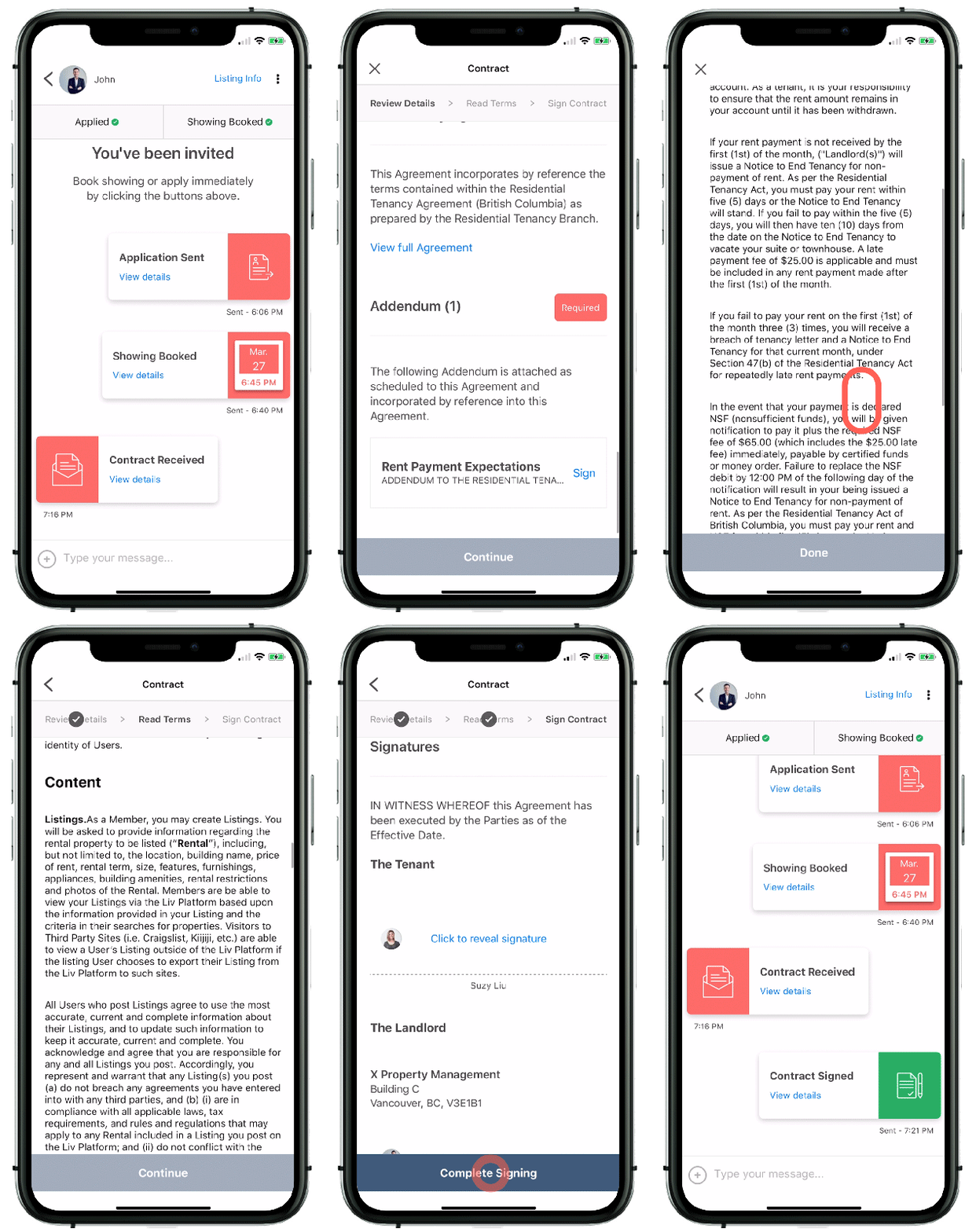
Rethink The Way You Rent
Not on liv.rent yet? Experience the ease of digital applications & contracts, verified tenants & landlords, virtual tours and more – all on one platform. Sign up for free or download the app.
Subscribe to receive the latest tenant & landlord tips and get notified about changes in the Canadian rental market.
>> Stay up-to-date on the average rent in Vancouver, Toronto and Montreal: Rent Reports.

0 Comments