


As AI continues to infiltrate more of our everyday lives, it seems only natural that it will be used to simplify the rental experience for both renters and landlords. AI tenant screening is a modern approach to evaluating rental applicants using advanced technology to analyze credit, background, income, and rental history. Unlike traditional methods that rely heavily on manual review, AI can process large amounts of data quickly and consistently, helping landlords make faster, more informed decisions. It also reduces the risk of human error and bias, offering a fairer and more accurate screening process.
However, the technology is still very new, and there are still concerns that AI cannot understand certain nuances and subtle implications that relate to human-based decision making. With growing adoption across the rental industry, it’s important to understand how AI tenant screening works and what it means for both landlords and renters. This blog will explore the various concepts related to AI tenant screening, its benefits and shortcomings, and how it will impact renters and landlords.
Join Our Newsletter
For more info on rental laws and policies (e.g. eviction, lease agreements, repairs & maintenance), subscribe to get the latest news.
What is tenant screening?
Tenant screening is the process landlords use to evaluate potential renters before offering them a lease. It helps ensure that applicants are reliable, financially stable, and likely to take care of the property. A thorough screening can prevent issues like missed rent payments, property damage, or lease violations by giving landlords a clearer picture of who they’re renting to and what they are like in their daily lives. Landlords are always wanting to know they have reliable, trustworthy people in their units, so the screening process is essential to a beneficial experience for both parties.
Credit checks
A credit check gives landlords insight into a tenant’s financial responsibility. It includes information like credit scores, payment history, outstanding debts, and any past bankruptcies. This helps landlords assess whether a tenant is likely to pay rent on time and manage their financial obligations. A strong credit history is often a sign of a dependable tenant.
Background and criminal history
Checking a tenant’s background and criminal history is an important part of maintaining a safe and secure rental environment. These checks can reveal past legal issues, such as convictions or charges, that may be relevant to the rental decision. Landlords typically follow consistent and fair criteria to ensure the process is both effective and compliant with local laws.
Employment & income verification
Verifying a tenant’s income and job status helps landlords confirm that the applicant can afford the rent. This might involve reviewing pay stubs, contacting employers, or requesting bank statements. Stable employment and sufficient income are strong indicators that a tenant will be able to meet their monthly rental obligations.
Rental history & references
A tenant’s previous rental experience often speaks volumes about how they’ll behave in a new home. Landlords may contact previous landlords to ask about the tenant’s payment habits, care of the property, and overall conduct. A positive rental history free of evictions, late payments, or disputes is a strong sign of a responsible renter.
Why landlords screen tenants
Screening tenants is one of the most important steps landlords take to protect their property and ensure a smooth rental experience. By reviewing a tenant’s background, financial situation, and rental history, landlords can make informed decisions and reduce the risk of future issues.
Tenant screening helps:
- Minimize late or missed rent payments by choosing renters with solid financial backgrounds.
- Prevent property damage by selecting responsible tenants who will take care of the home.
- Avoid lease violations by identifying applicants with a history of following rules and respecting agreements.
- Create a safe environment for neighbors and the community by checking for serious criminal history.
Ultimately, screening helps landlords find trustworthy tenants, which leads to fewer vacancies, less stress, and a more successful rental experience overall.
The modern rental market
Today’s rental market is faster, more competitive, and more data-driven than ever before. Landlords and property managers are juggling multiple listings, responding to a growing number of applicants, fighting off scammers and fake listings, and trying to make informed decisions quickly, all while staying compliant with fair housing laws. In this environment, traditional tenant screening methods can feel slow, inconsistent, and prone to human error.
Artificial intelligence (AI) is transforming the way landlords manage their properties—and tenant screening is no exception. AI can analyze large amounts of data in seconds, spot patterns that might be missed by the human eye, and generate consistent, objective reports for every applicant. This means faster decisions, fewer biases, and a more streamlined experience for both landlords and renters. From automating credit analysis to simplifying background checks, AI is helping modernize the entire rental process.
What is AI tenant screening?
AI tenant screening is an advanced approach to evaluating rental applicants using artificial intelligence technology. Instead of relying solely on manual reviews and paperwork, AI systems analyze applicant data quickly and objectively to help landlords make more data-driven, consistent decisions. This modern method is designed to reduce human bias, save time, and improve accuracy in the screening process.
Definition and overview
At its core, AI tenant screening refers to the use of algorithms and data analysis tools to assess rental applications. These systems evaluate factors like credit history, income, background checks, and rental history just like traditional screening, but do so using automated processes. The result is a faster, more standardized way to identify qualified tenants and minimize risk.
How it works
AI tenant screening works by collecting data from a variety of sources, analyzing it using machine learning models, and generating a risk assessment or score for each applicant. This score helps landlords compare applicants fairly and efficiently, based on clear, data-driven criteria.
Data collection & input sources
The screening process begins with gathering data from multiple verified sources. These may include:
- Credit bureaus (for credit history and scores)
- Public records (for criminal background checks)
- Employment and income verification platforms
- Rental history databases
- Application forms and ID documents
Tenants typically give consent for this data to be collected during the application process. Additionally, potential tenants will submit this information when applying for a rental unit. AI will be used to quickly sort, evaluate and score based on certain criteria.
Machine learning algorithms
Once the data is collected, machine learning algorithms step in. These algorithms are trained to recognize patterns and assess risk based on large datasets. They can detect early warning signs—like frequent late payments or past evictions—and compare them to successful renter profiles. These algorithms are used in all kinds of common situations in today’s world, even though you may not know it.
Risk scoring and output
After processing the data, the system generates a risk score or applicant profile. This output summarizes the applicant’s strengths and potential concerns, making it easier for landlords to decide whether to approve, deny, or request more information. The scoring is typically based on predefined criteria set by the landlord or property manager, ensuring the decision-making process is aligned with their policies and legal requirements.
Comparison: AI vs traditional screening
| Feature | AI Tenant Screening | Traditional Tenant Screening |
| Speed | Processes applications in minutes | Can take hours or days to complete manually |
| Consistency | Uses the same criteria and logic for every applicant | Varies depending on who is reviewing and interpreting the data |
| Bias Reduction | Designed to minimize personal and unconscious bias | More susceptible to human bias and subjective decisions |
| Data Analysis | Analyzes large volumes of data quickly and accurately | Limited to what a person can manually review and interpret |
| Scalability | Easily handles high volumes of applications | Becomes slower and more error-prone as application volume increases |
| Customization | Scoring models can be adjusted to fit specific risk tolerance | Customization is possible but time-consuming |
| Legal Compliance Support | Can be programmed to flag non-compliant decisions | Requires legal knowledge and ongoing training |
| Cost Over Time | Often more cost-effective long-term due to automation | Higher labor costs for manual reviews and follow-ups |
| Applicant Experience | Faster, more streamlined process | Slower and may involve more back-and-forth communication |
Why Use AI in tenant screening?
As the rental industry becomes more fast-paced and competitive, landlords and property managers are turning to AI to simplify and strengthen the tenant screening process. AI brings major advantages that go beyond speed—helping improve decision-making, reduce risk, and enhance the overall rental experience.
Speed and efficiency
AI can analyze and process tenant applications in minutes, cutting down wait times and accelerating leasing decisions. This helps reduce vacancies and keeps the rental process moving.
Consistency and objectivity
By applying the same criteria to every applicant, AI ensures a more fair and impartial evaluation, helping avoid personal bias and meet fair housing standards.
Scalability for landlords and property managers
Whether managing a handful of units or hundreds, AI can handle large volumes of applications without sacrificing quality or accuracy, making it highly attractive for busy landlords, property managers or real estate companies.
Integration with rental platforms
Many AI screening tools integrate seamlessly with rental and property management software, allowing for automated workflows and a smoother application process.
Reduced human error
AI minimizes the chance of mistakes in data entry, calculations, or missed red flags, leading to more reliable decisions and fewer costly oversights.
Who is using AI Tenant screening?
AI tenant screening is no longer just a high-tech buzzword—it’s becoming a standard tool across the rental industry. From large firms to solo landlords, a wide range of users are adopting AI to improve how they evaluate rental applicants and manage properties.
Large property management companies
These companies often process hundreds or thousands of applications and rely on AI to streamline operations, reduce manual work, and ensure consistent screening across all properties.
Independent landlords
Smaller landlords are using AI tools to save time and make more confident decisions without needing a full team or deep legal expertise.
Real estate investors
Investors with multiple rental units use AI to scale efficiently, screen tenants remotely, and reduce risk across their portfolios.
PropTech companies & rental platforms
Property technology or proptech is used in the real estate industry with technology-driven rental platforms and integrated AI screening in their services to offer fast, built-in evaluations for landlords and renters alike.
Efficiency & accuracy
AI brings a new level of precision to tenant screening by automating complex tasks and reducing the chances of errors or missed red flags. The result is a faster, more reliable screening process that helps landlords make better decisions with less effort.
Real-time tenant evaluation
Applications can be processed instantly, with real-time scoring based on up-to-date data. This speeds up decision-making and helps landlords act quickly in competitive markets.
Data validation and fraud detection
AI tools can detect inconsistencies in documents, flag suspicious activity, and verify information like income or identity. This helps prevent rental fraud before it happens.
Predictive analytics: Payment risk & behavior forecasting
Using historical data and patterns, AI can predict an applicant’s likelihood of paying on time or violating lease terms. This gives landlords insight beyond a simple credit score.
Concerns & ethical considerations
While AI tenant screening offers many benefits, it also raises important questions about fairness, transparency, and data protection. The current opinions around AI are conflicting, and many are divided about whether relying solely on machine-driven decision making is possible in our human world. Understanding these concerns is key to using the technology responsibly and legally.
Algorithmic bias
AI systems can unintentionally reflect biases found in the data they are trained on. If not properly monitored, this can lead to unfair outcomes for certain groups of applicants. By being unable to factor humanity and humility into decisions, AI may be making unfair or harsh judgments on applicants that do not reflect who the renter is in real life.
Transparency and explanation of results
It’s important that landlords and applicants understand how screening decisions are made. Clear explanations build trust and help ensure accountability, and relying on AI to explain and filter all information can feel unfair to those seeking a human connection. Mistakes or minor hiccups in credit or rental history can be overexposed by AI, and what was maybe a small event in someone’s past maybe be inflated or overexaggerated by focussing only on the data results.
Fair housing compliance
AI tools must be designed and used in ways that comply with fair housing laws and renters must still be considered human beings that are prone to errors. Additionally, in today’s harsh political and financial climate, humility and understanding needs to be applied when considering housing. Landlords are still responsible for ensuring that automated decisions do not result in discrimination and that fairness is applied to all applicants.
Data privacy (e.g., GDPR, CCPA)
Tenant data must be handled securely and in line with privacy regulations. This includes clear consent, secure storage, and the right for applicants to access or delete their information. It should be recognized that AI will screen and store vast amounts of personal data, and many AI tenant screening tools will retain that data, possibly for decades. Before exposing oneself to an AI tenant screening system, renters should be aware of these implications, landlords should be forthcoming about what is being collected, and both should be comfortable with what is being asked of them.
The future of AI in tenant screening
AI is already reshaping the rental industry, but its impact is just beginning. As technology continues to evolve, we can expect more advanced tools that make tenant screening smarter, more efficient, and more intuitive—while raising new questions about regulation, ethics, and the role of human judgment.
Upcoming trends in AI and PropTech
The intersection of AI and property technology (PropTech) is bringing innovation to every stage of the rental process. From smart leasing platforms, AI-enhanced listings, virtual staging, predictive maintenance technologies and more, future screening tools will likely be even more integrated, offering end-to-end automation and deeper insights into applicant behavior and long-term tenant fit.
Natural language processing for reference checks
Natural language processing (NLP) is making it possible to analyze written or spoken landlord references more effectively. Instead of manually reading responses, AI can extract key sentiment, flag concerns, and highlight positive indicators, saving time and providing a more nuanced view of the applicant’s rental history.
Automated decision-making in property management
Beyond screening, AI is being used to automate tasks like lease approvals, rent setting, and even responding to maintenance requests. For tenant screening, this means quicker decisions and fewer delays, especially for landlords managing multiple properties or large portfolios.
Balancing automation with human oversight
As AI tools take on more responsibility, the need for thoughtful human oversight becomes even more important. Landlords must ensure that automated systems are transparent, fair, and aligned with legal and ethical standards. The future will likely involve a hybrid approach—leveraging AI for efficiency while keeping humans involved for judgment and accountability.
FAQs about AI tenant screening
Is AI tenant screening legal?
Yes, AI tenant screening is legal, but landlords must ensure it complies with fair housing laws and data privacy regulations.
Can AI screening be biased?
While AI is designed to reduce bias, it can still reflect biases in the data it’s trained on if not properly monitored, tested, and reviewed by a human being.
How accurate is AI tenant screening?
AI screening is typically very accurate in analyzing large data sets and identifying risk patterns, but it should be used alongside human judgment for best results.
What data does AI use for tenant screening?
AI tools may use credit reports, background checks, income verification, rental history, and application details—always with the tenant’s consent.
Can small landlords use AI screening tools?
Yes, many AI screening platforms are affordable and user-friendly, making them accessible for independent landlords and small property owners.
Rethink The Way You Rent
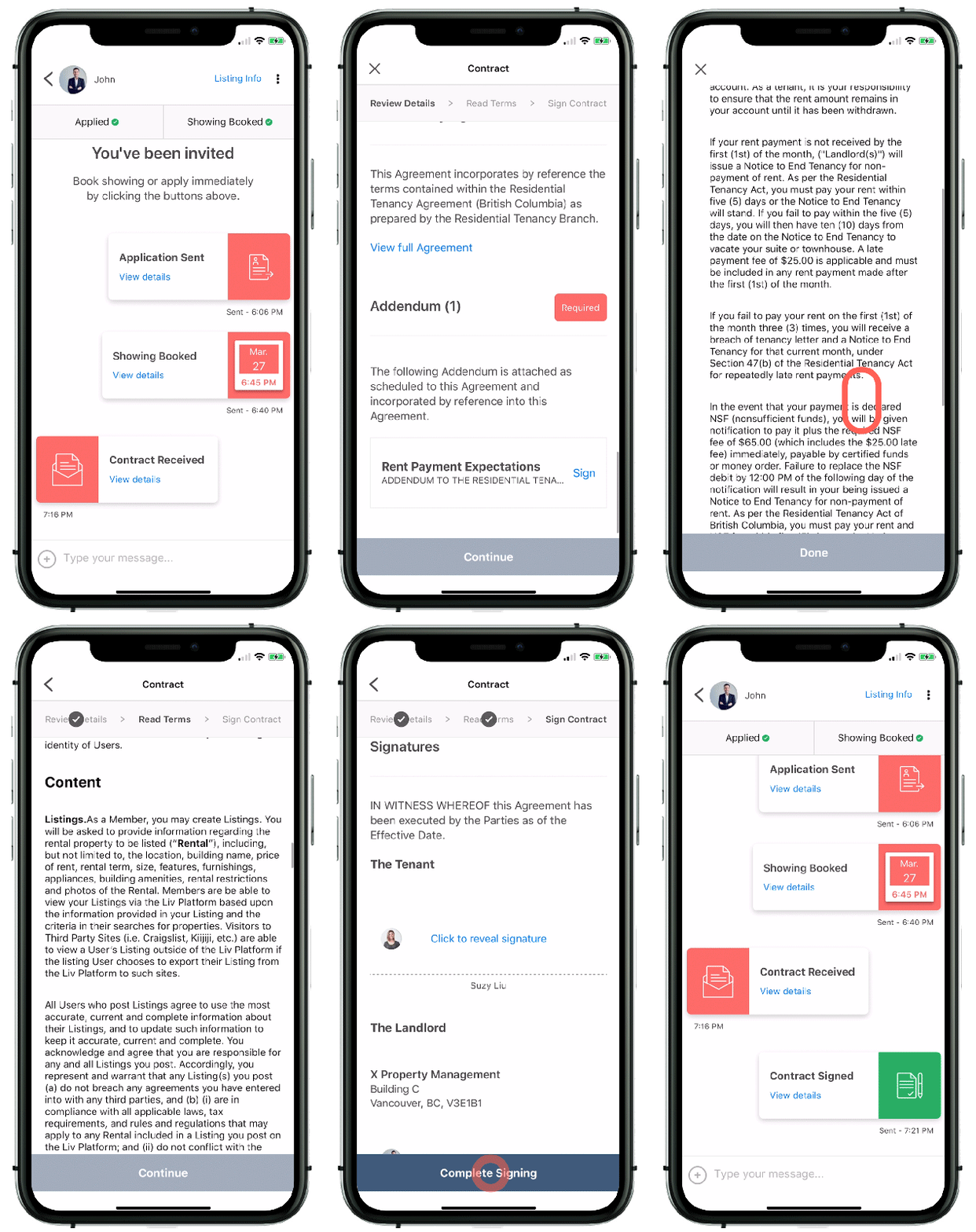
Not on liv.rent yet? Experience the ease of digital applications & contracts, verified tenants & landlords, virtual tours and more – all on one platform. Sign up for free or download the app.
Subscribe to receive the latest tenant & landlord tips and get notified about changes in the Canadian rental market.
>> Stay up-to-date on the average rent in Vancouver, Toronto and Montreal: Rent Reports.



0 Comments