


In B.C., the tribunal for a damage deposit dispute is the Residential Tenancy Branch (RTB), not the Civil Resolution Tribunal. Once your tenancy ends and your landlord has your forwarding address in writing, they have 15 days to return the deposit with any interest or apply to the RTB to keep some of it. If they do neither, you can ask the RTB for double, and the steps below take renters and landlords from the move-in inspection to the hearing.
Originally published 2019, updated November 2026. This is general information, not legal advice. For your own situation, check with the RTB or a lawyer.
Join Our Newsletter
For more info on rental laws and policies (e.g. eviction, lease agreements, repairs & maintenance), subscribe to get the latest news.
BC damage deposit rules at a glance
Most deposit problems come down to a few limits and deadlines. If you only need the numbers, the table has them as they stand in November 2026, checked against the Residential Tenancy Act and the Province’s deposit pages, and each one is explained below.
| Situation | The rule in B.C. |
| Security (damage) deposit | Up to half of one month’s rent |
| Pet damage deposit | Up to half of one month’s rent, however many pets |
| Paying the deposit | Within 30 days of signing the tenancy agreement (a pet deposit within 30 days of when it’s required) |
| Condition inspections | Required at move-in and move-out, with at least two chances offered to the tenant |
| Forwarding address | In writing, within one year after the tenancy ends |
| Return deadline | 15 days from the later of the end of the tenancy and receiving the forwarding address |
| If the landlord misses it | Tenant can ask the RTB for double the deposit |
| Deposit interest | 0% for 2026 |
| RTB filing fee | $100, with waivers for low income |
| Landlord’s claim for damage above the deposit | Within two years of the end of the tenancy, up to $35,000 |
How much is a damage deposit in BC?
A landlord in B.C. can ask for a security deposit of up to half of one month’s rent. That’s section 19 of the Residential Tenancy Act, and the same cap applies to a pet damage deposit. So if you have a pet and your landlord asks for both, the most you’ll pay up front is one full month’s rent.
The Province’s page on tenancy deposits and fees (updated March 4, 2026) uses a simple example: on rent of $1,500 a month, the security deposit can’t be more than $750. The amount is set by the rent in your original tenancy agreement. It doesn’t change later, even when your rent goes up, so a landlord can’t ask you to top it up.
What a landlord can’t charge
- More than one deposit of each kind. The Act allows one security deposit and one pet damage deposit per tenancy agreement, and a landlord can ask for the security deposit only when you sign the agreement.
- First and last month’s rent. The RTB’s Policy Guideline 29 treats a prepaid last month’s rent as part of the security deposit, so it counts toward the half-month cap.
- A non-refundable deposit. A tenancy agreement can’t say the landlord keeps all or part of a deposit automatically at the end.
- Pet fees on top of the deposit. The Province says landlords can’t charge other pet fees, such as a monthly pet fee. Certified guide and service dogs don’t need a pet deposit at all.
- A key deposit for your only way in. A landlord can’t charge for the key or fob that’s your only means of entry. Extra keys can carry a fee no higher than the replacement cost, refunded when you return them.
- A rental application fee. These are banned in B.C.
If you’ve overpaid, you don’t need to wait until you move out. You can tell your landlord in writing and take the extra off your next month’s rent, or apply to the RTB to get it back. As a renter, you have 30 days from signing the agreement to pay the security deposit; if you don’t, the landlord can serve a One Month Notice to End Tenancy.
Move-in and move-out inspections protect your deposit
The condition inspection report is how you and your landlord show what changed in the unit. The Province says comparing the move-in and move-out reports helps identify damage and who pays for it. B.C. law requires one at move-in and another at move-out, and either side can lose their deposit rights by skipping it. If you’re a landlord, it’s your job to arrange both.
- Offer two times. The landlord must offer the tenant at least two opportunities to do each inspection together (sections 23 and 35 of the Act).
- Walk through and write it down. Use the RTB’s Condition Inspection Report (form RTB-27) or an equivalent, and take photos as you go.
- Sign it and share it. Both of you sign, and the landlord gives the tenant a copy.
- Compare the two reports. At move-out, the move-in report is what shows whether something is new damage or was already there.
The consequences are written into the Act. A tenant who doesn’t turn up for either of the two offered times loses the right to get the deposit back. A landlord who doesn’t offer two times, doesn’t take part, or doesn’t complete and share the report loses the right to claim against the deposit for damage. If several roommates are on one agreement, the Province says the deposit isn’t returned until everyone has moved out and the move-out inspection is done.
Getting your damage deposit back in BC: steps for renters
When you move out, the clock on your deposit starts with two things: the end of your tenancy and your forwarding address. Once both are in place, your landlord has 15 days to act under section 38 of the Act.
- Do the move-out inspection. Pick one of the times your landlord offers, check the unit against the move-in report, and keep your copy of the signed report.
- Give your forwarding address in writing. Serve it in one of the ways the law allows, such as handing it over or sending it by mail, and keep proof. You have up to one year after the tenancy ends; after that, the landlord can keep the deposit.
- Wait 15 days. Count from the later of your tenancy’s end date and the day your landlord got your address. In that time, the landlord must return your deposit with any interest, or apply to the RTB to keep some of it. They can pay you electronically, in person, or by mail, and they can’t charge a fee for returning it.
- If nothing happens, apply for a direct request. The RTB’s direct request process lets you apply 20 days after the tenancy ends and you’ve given your address. An adjudicator decides on your written evidence alone, with no hearing.
- Ask for double and your fee. If your landlord didn’t return the deposit or apply in time, section 38(6) says they must pay you double the deposit. Interest is worked out on the original deposit and isn’t doubled, according to the RTB’s Policy Guideline 17. You can also ask for the $100 filing fee back (the fee as of November 2026).
Before you apply, you can email the RTB at HSRTO@gov.bc.ca to check whether your landlord has already applied to keep the deposit. If they have, you can file your own application and the RTB may hear the two together. If you agreed in writing to let the landlord keep part of it, you can only ask for the rest.
Keeping part of a deposit: steps for landlords
If you’re a landlord, you can’t decide on your own to keep a deposit. Under section 38 of the Act, you need either the tenant’s written agreement at the end of the tenancy or an order from the RTB. You can’t deduct for normal wear and tear, and a pet damage deposit can only go toward damage caused by a pet unless the tenant agrees otherwise.
- Do both inspections properly. Without them, you may lose the right to claim against the deposit for damage.
- Work out the interest first. The Province says you must calculate interest on the full deposit before you return it, ask for deductions, or apply to keep any of it.
- Ask the tenant to agree in writing. If they agree to a deduction, return the rest with interest on the full amount.
- Otherwise, apply to the RTB within 15 days. Apply for dispute resolution claiming against the deposit, and bring the inspection reports, photos, receipts and any messages. Applying in time is what keeps you clear of the double-deposit penalty.
- Claim the rest if the damage costs more. If repairs cost more than the deposit, you can ask the RTB for a monetary order for the difference. You have two years from the end of the tenancy, and the RTB’s limit for money claims is $35,000 as of November 2026.
Not sure what counts as damage? Our post on normal wear and tear vs damage has examples. The RTB’s Policy Guideline 1 sets out who’s responsible for cleaning and repairs in a B.C. rental.
Interest on damage deposits in BC for 2026
B.C. landlords still owe interest on deposits, but the rate for 2026 is 0%. Under the Residential Tenancy Regulation, the rate is 4.5 percentage points below the prime lending rate of the Province’s main bank on January 1 of each year. Interest compounds annually.
Because the rate changes every year, an older deposit can still earn something for the years it was held. The Province lists these recent rates on its deposits page (updated March 4, 2026):
| Year | B.C. deposit interest rate |
| 2026 | 0% |
| 2025 | 0.95% |
| 2024 | 2.7% |
| 2023 | 1.95% |
You don’t need to do the maths yourself. The RTB has a free deposit interest calculator: enter the deposit amount, the date the landlord received it and the date it’s returned, and it works out the interest owed.
Which tribunal handles a damage deposit dispute in BC?
For a tenancy covered by the Residential Tenancy Act, it’s the RTB. The Civil Resolution Tribunal says claims under that Act, including damage and security deposits, belong with the RTB (page updated October 2, 2026). The exception is a dispute with a roommate or other occupant you live with, such as a deposit you paid to the head tenant rather than to the landlord. The RTB doesn’t handle those, and the Province says the CRT can take them, for claims up to $5,000 as of November 2026.
How to apply to the RTB
- Pick the process. A tenant whose landlord didn’t act within 15 days can use a direct request. Other deposit claims, including a landlord’s claim to keep a deposit, go to a participatory hearing in front of an arbitrator.
- Apply online or on paper. Online applications need a Basic BCeID. You can also apply in person at a Service BC office or the RTB.
- Pay the $100 filing fee. That’s the fee on the RTB’s fees and fee waivers page (updated March 4, 2026). You can ask for a waiver if your household income is below the Government of Canada’s low-income cut-offs, you’re on income assistance, or you’ve had extraordinary expenses.
- Serve the other side. Once the RTB prepares your package, you must serve it to the other party, within three days for a direct request.
- Enforce the order if you need to. If the other side doesn’t pay a monetary order, you enforce it through the B.C. courts. The RTB doesn’t collect it for you.
Our guide to the BC Residential Tenancy Branch covers its phone numbers, hearings, reviews and enforcement in more detail.
Avoiding a deposit dispute in the first place
The rules above all depend on a few records you can start keeping on day one. Each item below ties back to one of them, and it applies to renters and landlords alike.
- Keep proof the deposit was paid, such as an e-transfer confirmation or a receipt for cash or a cheque.
- Check that your tenancy agreement states the deposit amount and the date it was or must be paid, as the Act requires.
- Do both condition inspections, with photos, and keep your signed copy of each report.
- Serve the forwarding address in writing and keep proof of when it was received.
- Put any agreement to keep part of the deposit in writing, with the amount.
Deposits are one part of renting in B.C. For rent increases, notice periods, repairs and evictions, see our guide to the BC Tenancy Act. For the forms you’ll sign at the start of a tenancy, see our guide to BC tenancy forms.
FAQ: Damage deposits in BC
How much is a damage deposit in BC?
In B.C., a landlord can charge a security (damage) deposit of up to half of one month’s rent, under section 19 of the Residential Tenancy Act. A pet damage deposit has the same half-month cap, however many pets you have. On rent of $1,500 a month, that’s $750 at most for each, as of November 2026.
How long does a landlord have to return a damage deposit in BC?
Fifteen days from the later of the day the tenancy ends and the day the landlord receives your forwarding address in writing. In that time, a B.C. landlord must return the deposit with any interest, or apply to the Residential Tenancy Branch to keep part of it. You have up to one year to give your address.
What can I do if my landlord doesn't return my deposit in BC?
Apply to B.C.’s Residential Tenancy Branch for a direct request, 20 days after the tenancy ends and you’ve given your forwarding address in writing. If the landlord neither returned the deposit nor applied to keep it, the Residential Tenancy Act says they must pay you double. The filing fee is $100 in 2026, and you can ask for it back.
Do landlords pay interest on damage deposits in BC in 2026?
The rate for 2026 is 0%, so a deposit earns no interest this year. B.C. landlords still owe interest for earlier years the deposit was held: 0.95% in 2025, 2.7% in 2024 and 1.95% in 2023. The Residential Tenancy Branch has a free deposit interest calculator that works out the total for you.
Can a landlord keep my damage deposit for damage in BC?
Only with your written agreement at the end of the tenancy or an order from B.C.’s Residential Tenancy Branch. A landlord can’t deduct for normal wear and tear, and a pet damage deposit covers only pet damage unless you agree otherwise. A landlord who skipped the required condition inspections can lose the right to claim against the deposit for damage.
Does the Civil Resolution Tribunal handle damage deposit disputes in BC?
Not for tenancies covered by B.C.’s Residential Tenancy Act. Those deposit disputes go to the Residential Tenancy Branch, and the Civil Resolution Tribunal says they belong there. The CRT can hear disputes with a roommate or occupant you live with, such as a deposit paid to a head tenant, for claims up to $5,000 as of November 2026.
Can a landlord ask for first and last month's rent in BC?
No. In B.C., a landlord can collect a security deposit of up to half a month’s rent, plus a pet damage deposit of up to half a month’s rent if pets are allowed. The Residential Tenancy Branch’s Policy Guideline 29 treats a prepaid last month’s rent as part of the security deposit, so it counts toward that cap.
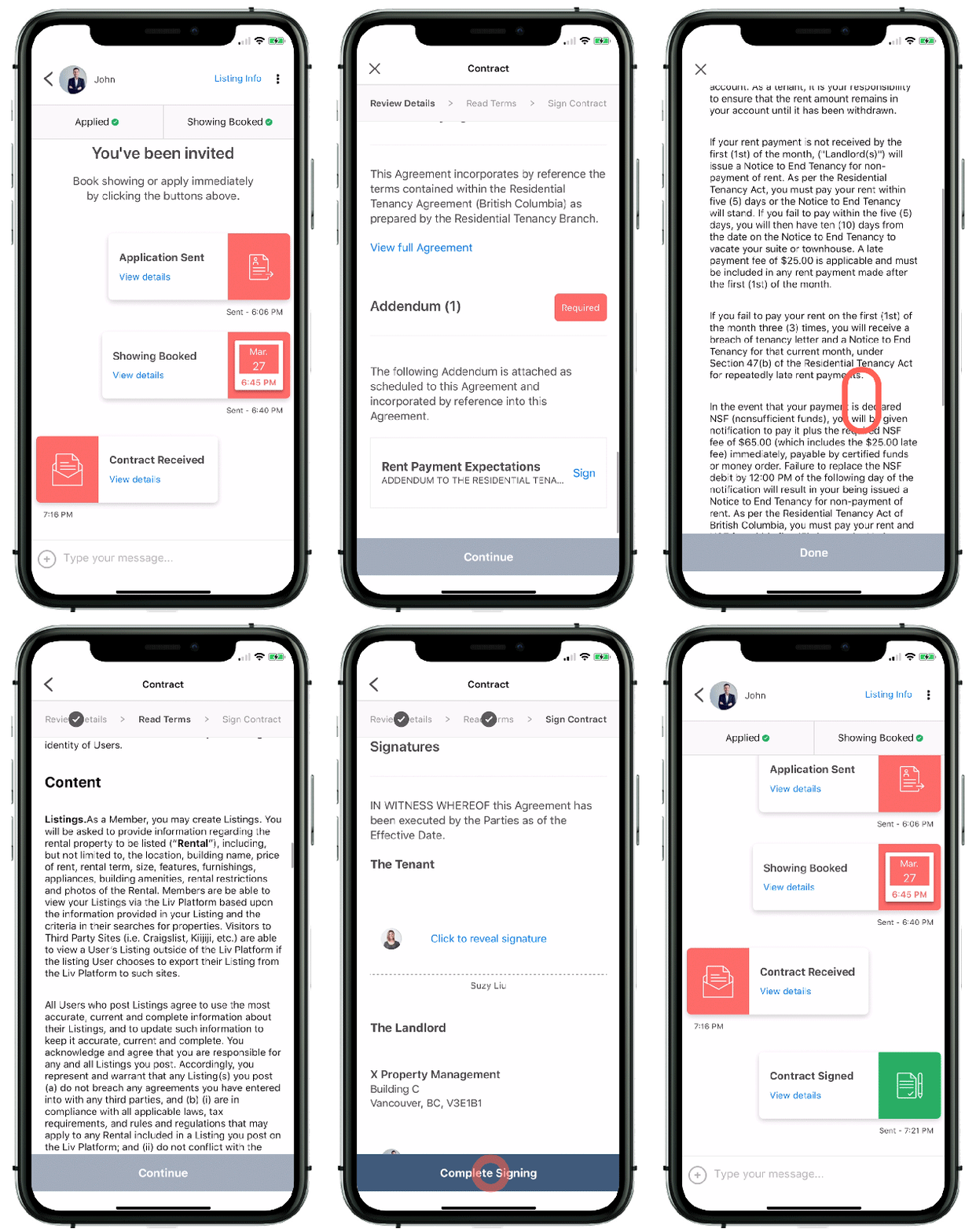
Rethink The Way You Rent
Not on liv.rent yet? Experience the ease of digital applications & contracts, verified tenants & landlords, virtual tours and more – all on one platform. Sign up for free or download the app.
Subscribe to receive the latest tenant & landlord tips and get notified about changes in the Canadian rental market.
>> Stay up-to-date on the average rent in Vancouver, Toronto and Montreal: Rent Reports.


0 Comments